Victorian Court Dress with Trumpet Sleeves: What Buyers Look For
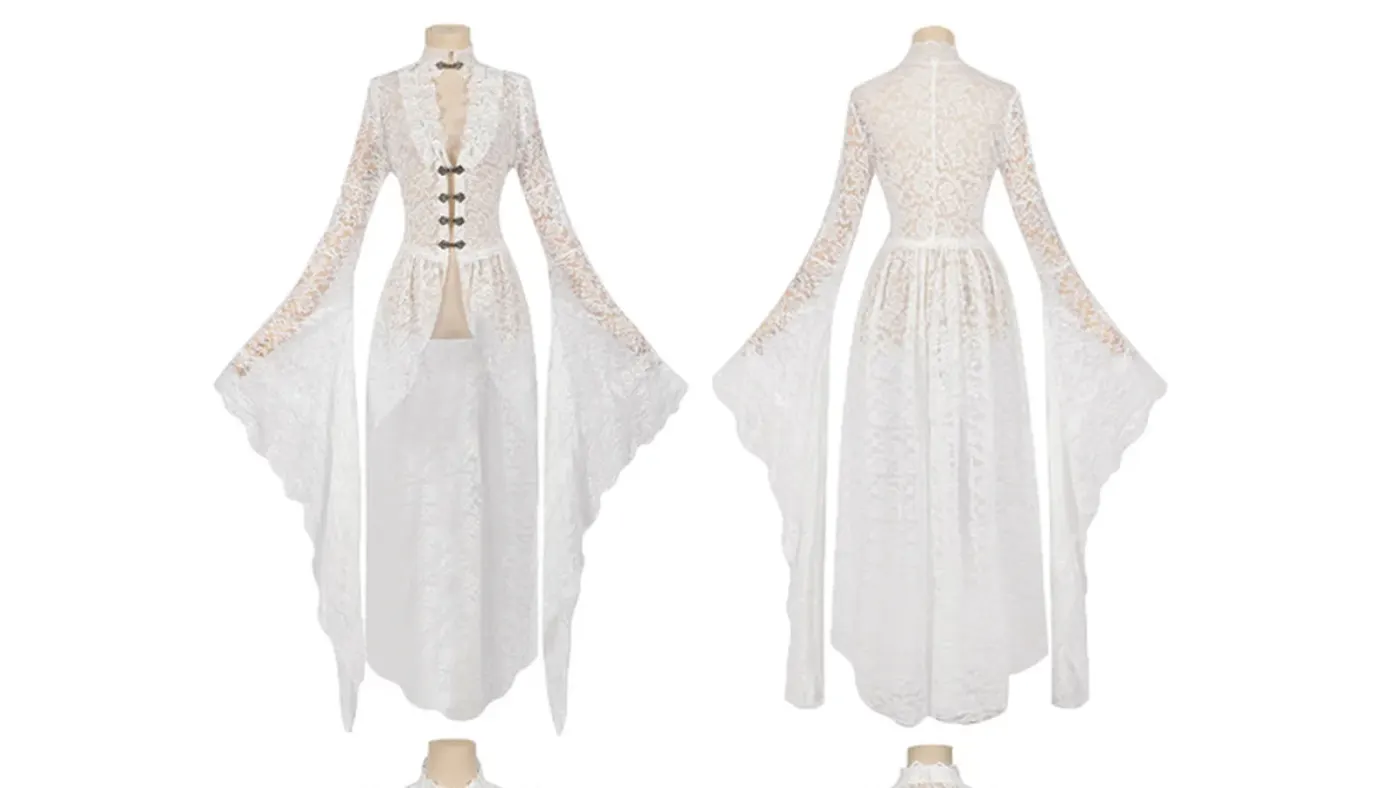
Victorian-inspired costumes return every autumn because they solve a merchandising problem: they look expensive on a hanger and dramatic in a photograph without relying on a licensed character. The version buyers ask for most often is a long lace gown with a high collar, a fitted body and sleeves that flare from the elbow into a wide trumpet cuff.
The silhouette is simple to describe and harder to produce well. Lace quality, the position of the waist, the way the sleeve falls and the closure system decide whether the piece reads as a costume or as a party dress with a historical label attached.
The silhouette: high collar, fitted body, flared cuff
A court-style gown usually has a stand collar, a close-fitting bodice and a skirt that opens below the waist. The trumpet sleeve is the signature: fitted from shoulder to elbow, then flaring into a bell that can be lined or left sheer. In the sample we reviewed, the sleeve is cut in one piece with a deep flare and a scalloped lace edge, which gives movement without adding a separate cuff.
The front is often open from the waist down, with the skirt falling away to reveal a slip or underdress. That opening is a design decision, not a fault. For retail, decide whether the piece is sold as a standalone gown or as a layering piece with a matching slip. If it is sold alone, the coverage at the front and back needs to be clear in the product photos and description.
What the sleeve does on camera
Trumpet sleeves are photogenic because they create a strong diagonal line when the arm is raised. They also show every shortcut. A sleeve that is too short in the upper arm restricts movement; a flare that starts too low looks like a cuff rather than a sleeve; a sheer lace flare without a clean edge curls or catches on jewellery.
When reviewing a sample, ask the model to raise both arms, bend the elbows and turn the wrists. Check that the underarm seam does not pull and that the flare falls evenly on both sides. If the lace is stiff, the sleeve will stand away from the arm; if it is very soft, it may collapse. Neither is wrong, but the choice should be deliberate and consistent across sizes.
Lace, lining and coverage
Lace is sold by width, pattern repeat and ground fabric. A narrow lace with a small motif reads as delicate; a wide lace with a large floral repeat reads as theatrical. The ground can be a fine mesh, a stretch net or a solid tulle. Stretch net is more forgiving in fit; rigid tulle holds a shape but can scratch.
Check the pattern placement at the centre front, the collar and the sleeve cap. A lace motif cut through the middle of a flower looks careless; a motif centred on the collar looks intentional. Ask whether the lace is stitched or bonded to the backing, and whether the edges are finished with a scallop, a binding or a narrow hem.
Lining matters more than buyers expect. A sheer lace gown needs a slip or an opaque panel at the bust and hip; a fully lined version feels warmer and more substantial but loses the transparency that makes the style distinctive. The right answer depends on the sales channel: a costume shop may prefer a complete, ready-to-wear piece, while a boutique may sell the gown as a layering item.
Closures and fit
Court-style costumes often use frog closures, hooks or a concealed back zip. Frog closures are decorative and period-appropriate, but they need a reinforced backing; on thin lace they can pull through. A back zip is more secure but interrupts the lace pattern, so the seam should be planned in the pattern rather than added afterwards.
The waist position is the most common fit complaint. A gown that sits too high looks short in the torso; one that sits too low loses the court silhouette. Measure the front and back waist drop from the shoulder on the sample, and compare it with your size chart. If the gown is worn over a corset, fit it over the same corset; otherwise the waist will sit differently on the body.
Styling and merchandising
This is a portrait piece. It sells with dark styling, dramatic lighting and a clear sense of occasion: a masquerade, a Victorian-themed party, a photo shoot or a stage role. Pair it with a choker, gloves, a small crown or a veil, and show at least one full-length image so the train and sleeve flare are visible.
For a seasonal range, offer the gown in ivory, black and one deep colour. Ivory photographs best against dark backgrounds; black reads as gothic and is easier to wear across events. If the lace is available in a second colour, confirm the dye lot before committing to a large run.
Buying checklist
- Is the lace pattern centred at the front, collar and sleeve cap?
- Does the trumpet flare start at the elbow, and is it even on both sleeves?
- Are the closures reinforced, and does the back zip lie flat?
- Is the front opening designed for a slip, or does the gown include one?
- Does the waist sit at the intended point when worn over a corset?
- Are the train and hem finished so they do not catch on heels?
Our Victorian collection includes lace gowns, corsets and capes that can be merchandised together. For a private-label version, send the reference, target price and size range through the inquiry form; we will confirm lace options and sampling time before production.
FAQ
What is a trumpet sleeve?
A trumpet sleeve is fitted from the shoulder to the elbow or forearm, then flares into a wide bell at the wrist. It is a common Victorian and fantasy costume detail because it adds movement and photographs well.
Should a lace Victorian gown be lined?
It depends on the sales channel. A fully lined gown is ready to wear and more opaque; a sheer gown is a layering piece and needs a slip or underdress. Confirm the intended wearer and coverage before production.
How do I choose the right size for a corset-style gown?
Measure the bust, waist and hip over the undergarments the costume will be worn with, then compare with the garment measurements. If the gown laces at the back, allow for adjustment, but do not rely on lacing to bridge more than a few centimetres.
Planning a seasonal or private-label range? Send us your brief and our team will reply with fabric, sampling and lead-time options.