Oktoberfest Dirndl Anatomy: Apron, Bodice and Blouse Combinations
Oktoberfest is a short, intense season, and the dirndl is its uniform. Unlike a Halloween costume, a dirndl is often bought as a real outfit: customers care about fit, fabric and whether the apron ties correctly. That makes it a product where small construction details have a direct effect on reviews and reorders.
The four parts of a dirndl
- Bodice — a fitted, often boned or lined panel that closes at the front with lacing, buttons or a zip.
- Blouse — a separate top, usually white, with puff sleeves and a low or high neckline depending on the style.
- Skirt — a full, gathered or pleated skirt attached to the bodice or made as a separate piece.
- Apron — a rectangle or shaped panel tied at the waist, often in a contrasting colour or print.
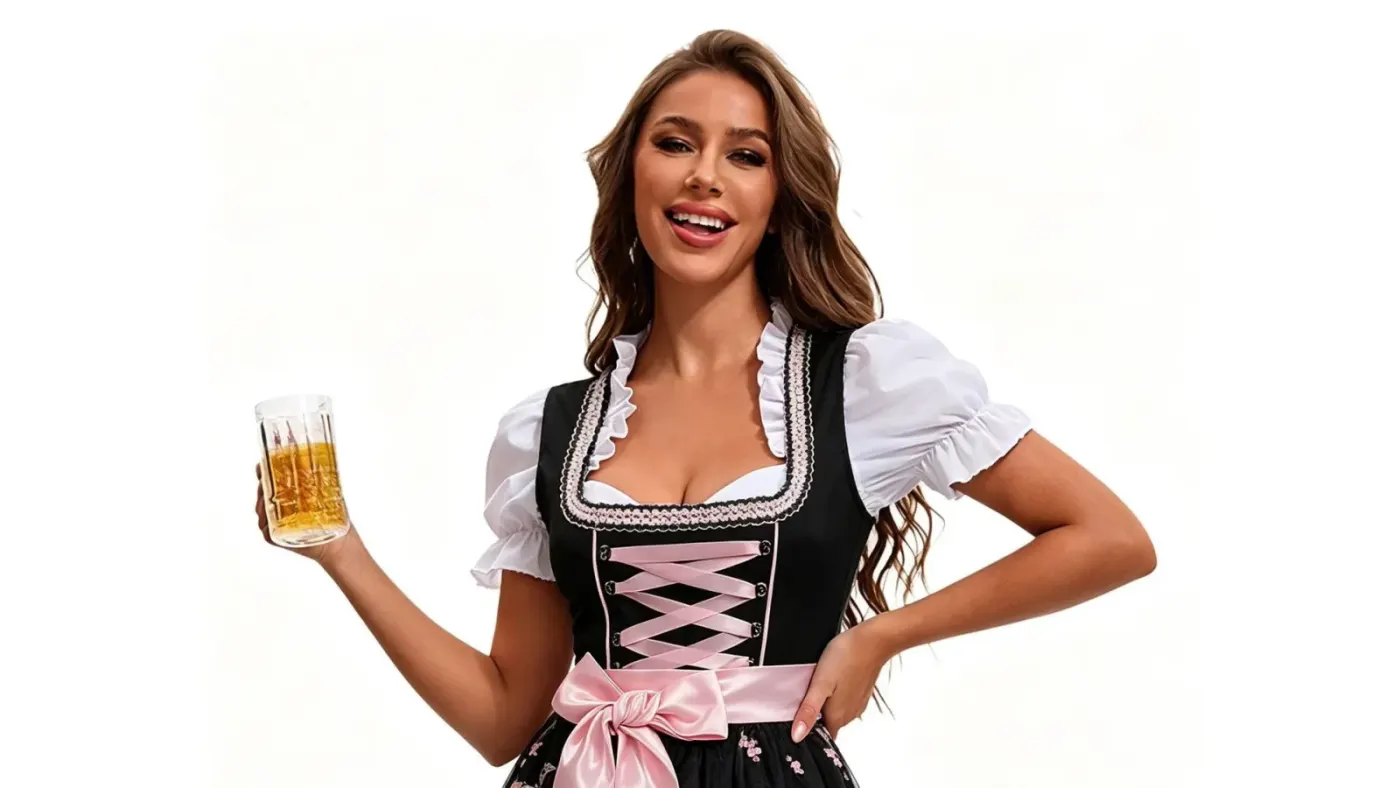
The sample we reviewed is a black dress with pink floral embroidery, a white puff-sleeve blouse, a pink satin apron and a lace-up bodice. It is a classic party dirndl: decorative, comfortable and easy to recognise. Traditional dirndls may use wool, linen or cotton and a more restrained palette.
The bodice and lacing
The bodice is the structural piece. It should hold the bust, define the waist and stay flat when the wearer moves. Check the boning or interfacing: a flimsy bodice will roll at the top edge and gap at the lacing. The lacing should be adjustable but not rely on tightening to create the fit.
Look at the eyelets. Metal eyelets are more durable than stitched holes; a ribbon threaded through raw holes will fray the fabric. The lacing should be long enough to tie a bow and short enough not to trail. If the bodice has a zip, confirm that it is concealed and that the pull does not catch on the apron.
The blouse
The blouse changes the look more than any other piece. A white puff-sleeve blouse is traditional and versatile; a lace or embroidered blouse is more formal; a high-neck blouse is modest and works for daytime events. Check the sleeve elastic and the neckline: a blouse that is too low or too tight will be uncomfortable under the bodice.
Fabric matters. A cotton or cotton-blend blouse is breathable; a polyester blouse can be hot in a crowded tent. Confirm that the blouse is included or sold separately, and publish the measurements for both pieces.
The skirt and apron
The skirt should be full enough to sit and dance in, with a hem that clears the floor. Check the waistband and the gather distribution: an uneven gather looks homemade. If the skirt is attached to the bodice, confirm that the seam sits at the natural waist and does not twist.
The apron is the finishing piece. It should be wide enough to cover the front of the skirt, with ties long enough to wrap around the waist and knot at the front or side. A satin apron is shiny and party-ready; a cotton apron is more traditional. Check that the apron does not slip down when the wearer moves.
Fabric and colour
Party dirndls often use polyester satin, tulle and embroidery for a dramatic look. Traditional dirndls use cotton, linen or wool. For a costume range, a polyester blend is practical and easy to care for; for a premium range, a cotton or linen blend feels more authentic and photographs better in daylight.
Black with pink embroidery, red with white, and navy with cream are reliable colour combinations. If you are building a range, choose one dark base and two apron colours so customers can mix. Confirm the dye lot across the bodice, skirt and apron.
Size range and fit
Dirndls are fitted at the bust and waist, so a simple S–XL range may not fit all customers. The sample is available in S–5XL, which is a strong selling point for a party range. Check the bust and waist measurements for each size, and confirm that the lacing can accommodate small variations.
For a traditional look, the dirndl should sit at the natural waist with the apron tied over it. For a party look, a shorter skirt and a more fitted bodice are common. Publish the length and the intended fit so customers know what they are buying.
Buying checklist
- Is the bodice structured enough to hold its shape?
- Are the eyelets metal and the lacing durable?
- Is the blouse included, and does it fit comfortably?
- Is the skirt full enough to sit and dance in?
- Does the apron stay in place when tied?
- Are the colours consistent across bodice, skirt and apron?
Our Oktoberfest collection includes dirndls, blouses, aprons and Lederhosen. For a group order or a private-label range, contact us through the inquiry form.
FAQ
What are the parts of a dirndl?
A dirndl consists of a bodice, a blouse, a skirt and an apron. The bodice is fitted and often laced or zipped, the blouse is usually white with puff sleeves, and the apron ties over the skirt.
How should a dirndl fit?
The bodice should be snug but comfortable, the waist should sit at the natural waist and the skirt should be full enough to sit and dance in. Check the bust and waist measurements rather than relying on a letter size.
Can I wear a dirndl outside Oktoberfest?
Yes. A dirndl is also worn at Bavarian festivals, themed parties, weddings and Halloween events. Choose a simpler colourway and a cotton apron if you want a more traditional look.
Planning a seasonal or private-label range? Send us your brief and our team will reply with fabric, sampling and lead-time options.