Medieval, Renaissance and Viking Costume Fabrics: A Buyer's Guide
Two medieval costumes can look identical in a photo and feel completely different in person. The difference is usually fabric: the weight of a cloak, the way a tunic breaks over a belt, whether a brocade catches the light or looks flat under stage lighting. For buyers, fabric is also the largest lever on cost after construction time.
This guide is a practical map of the fabrics used in medieval, Renaissance and Viking costumes, with the trade-offs we review when a buyer is choosing a price point. It is not a textile textbook; it is a buying guide for people who need a range that photographs well, wears comfortably and lands at the right landed cost.
Start with the silhouette, then choose the fabric
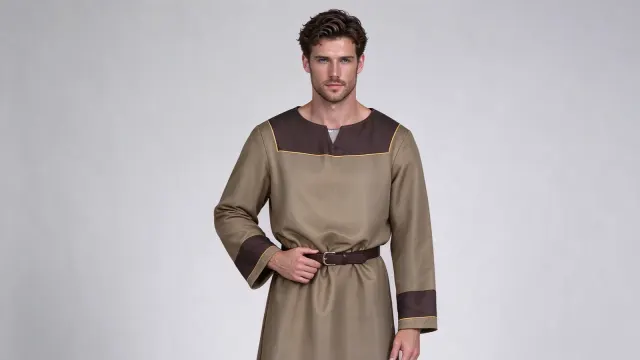
A costume reads as “medieval” or “Viking” through shape: a long tunic with a belted waist, a fitted bodice with a full skirt, a cloak with a deep hood, a structured doublet. Fabric should support that shape. A soft, lightweight jersey will collapse where a tunic needs to hang; a heavy upholstery fabric will make a full skirt too stiff to move.
Ask three questions before choosing a fabric:
- What must the garment do? Drape, hold a pleat, stretch with the body, or reflect light on stage?
- How will it be worn? Once for a party, repeatedly for a rental or theatre run, or daily for cosplay?
- What is the target price? The fabric budget should be set before the trim and packaging budget, because fabric drives both.
The six fabric families buyers ask for
| Family | Best for | What to watch |
|---|---|---|
| Polyester taffeta / broadcloth | Bodices, capes, skirts, economical tunics | Can look shiny under strong light; choose a matte finish for a historical look |
| Linen and linen blends | Viking tunics, shirts, summer Renaissance wear | Wrinkles easily; blends improve recovery but reduce the natural texture |
| Velvet and velour | Robes, cloaks, noble costumes, wizard looks | Crush marks in packing; pile direction changes the colour |
| Brocade and jacquard | Court gowns, doublets, waistcoats, trim | Pattern scale must match the garment size; heavy fabrics need stronger seams |
| Faux leather and suede | Armour skirts, belts, bracers, gladiator looks | Heat sensitivity in storage; check flex and peel resistance |
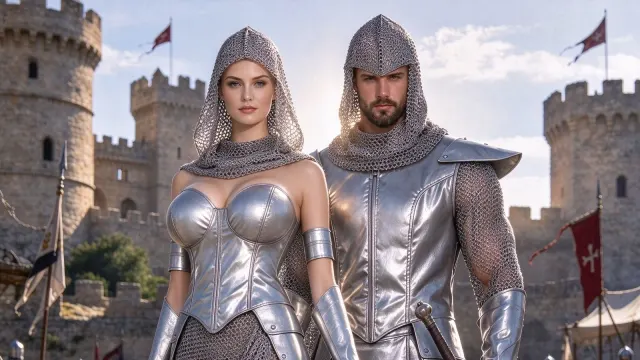
| Chainmail knit and metallic mesh | Knight costumes, fantasy armour, sleeves | Weight, scratchiness and snagging; line or bind edges |
Within each family there is a wide range of quality. Two polyester velvets can differ in pile density, backing weight and colour depth. Ask for a fabric swatch, not only a photo, and compare it under daylight and warm indoor light.
Weight and drape
Fabric weight is usually expressed in grams per square metre (gsm). Approximate ranges help compare options, but the hand-feel matters more than the number:
- Light shirting (around 110–160 gsm) — Viking undertunics, pirate shirts, summer Renaissance blouses. Breathable, but needs interfacing or a lining in structured areas.
- Mid-weight suiting (around 180–260 gsm) — Tudor doublets, noble jackets, tailored coats. Holds shape without being too heavy.
- Heavy cloak and upholstery (around 280–400 gsm) — capes, floor-length gowns, structured armour skirts. Strong drape, but a full-length cloak becomes heavy on the shoulders.
For full skirts, a mid-weight fabric with a soft hand usually moves better than a very stiff one. For fitted bodices, a stable weave plus boning and lining matters more than weight alone. If the garment will be worn on stage, test how the fabric behaves under the venue’s lighting; shiny fabrics can read as plastic on camera.
Surface detail: embroidery, metallic trim and lace
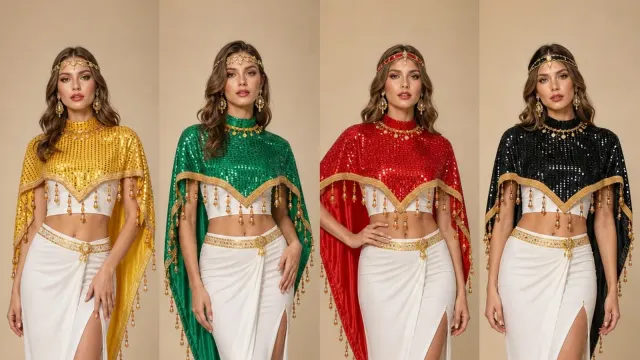
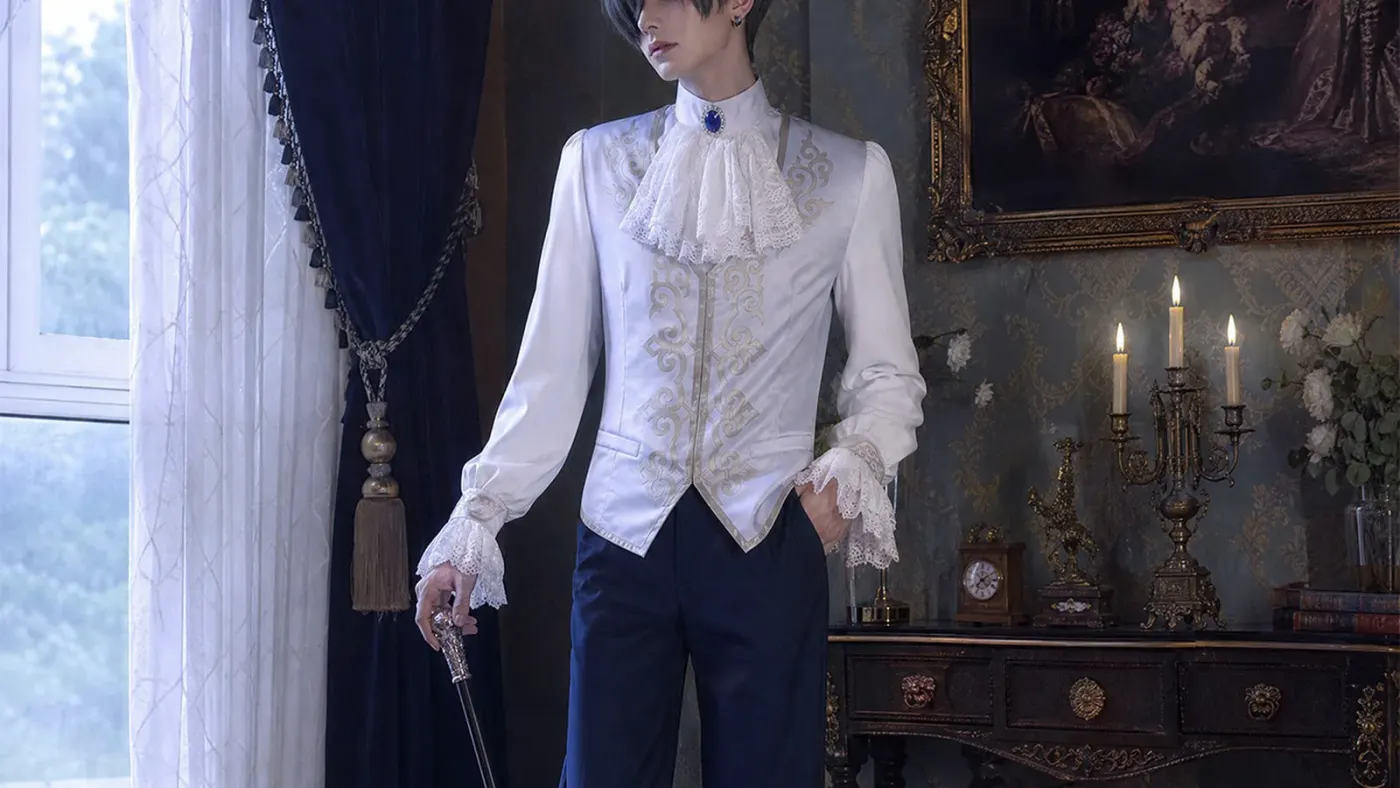
Historical costumes carry a lot of visual information in the surface: gold buttons, braid, lace, embroidery, appliqué and contrasting panels. These details are often where a cheap costume reveals itself. Stitched trim lasts; glued trim lifts at the edges. Metallic yarns can tarnish or scratch; lace can be stiff or soft depending on the ground fabric.
When sampling, check the back of the trim, not just the front. Ask how it is attached, whether it is pre-shrunk, and how it behaves after cleaning. For a rental or theatre program, specify a repair-friendly attachment so a loose trim can be re-stitched rather than replaced.
Colour, dye lots and lining
Deep reds, purples, blacks and greens are the hardest colours to match across dye lots. If you are reordering a bestseller, ask the supplier to keep the same fabric lot or to send a new swatch before cutting. Small differences are normal in dyed fabric and are not necessarily a defect, but they matter if two sizes of the same style will sit side by side on a rack.
Lining is not just a comfort feature. It protects the outer fabric from body oils and friction, hides construction, and helps a garment slide over other layers. For cloaks and heavy skirts, a smooth lining improves the drape and reduces the “sticking” feeling. For budget costumes, a half-lining in the bodice is often a better use of cost than a heavier outer fabric.
Comfort, climate and care
Costume fabrics are often worn in crowded venues, under stage lights or for several hours at a convention. Breathability and weight matter. A fully synthetic, unlined cloak can become uncomfortable quickly; a linen-blend tunic is cooler but wrinkles. If the product will be shipped to a hot climate, avoid heavy pile fabrics for full-body pieces unless the design calls for them.
Ask for care instructions that match the fabric and trims. Many costume pieces are spot-clean or hand-wash only; a care label that says machine-wash may be technically possible but will shorten the life of the trim. For rental and theatre buyers, specify a cleaning method and test it on the sample before bulk production.
Matching fabric to price point
| Price position | Fabric strategy | Where to spend |
|---|---|---|
| Entry | Polyester broadcloth or taffeta, minimal lining, printed or simple trim | Clean seams and a reliable closure; avoid over-detailing |
| Mid | Better polyester velvet or brocade, half-lining, stitched braid and lace | Fabric hand-feel and trim attachment; this is where most buyers compete |
| Premium | Linen blends, dense velvet, jacquard, full lining, embroidery | Drape, colour depth and finishing; expect a higher custom MOQ |
A higher fabric cost does not automatically produce a better costume. A mid-weight fabric with good cutting and a clean lining often looks better than a heavy luxury fabric with poor construction. Decide which two or three details the customer will notice, and spend there.
Questions to ask before sampling
- Can you send a swatch of the exact fabric and trim, not a similar one?
- What is the fibre content and approximate weight?
- Is the fabric pre-shrunk, and how should the finished piece be cleaned?
- What is the minimum order per colour, and how long does the fabric take to arrive?
- Can you line the bodice or cloak without changing the silhouette?
- How will the trim be attached, and can it be repaired?
Our medieval and Renaissance collection includes tunics, gowns, capes, corsets and noble jackets across several fabric levels. If you are developing a custom range, send the reference images and target price to our OEM/ODM team; we will propose fabric options before sampling rather than after.
FAQ
What fabric is best for a Viking costume?
A linen or linen-blend tunic is the most convincing for a Viking look, with a wool-like cloak for cool weather. For budget programs, a matte polyester broadcloth with a linen-look texture is a practical alternative. Avoid glossy fabrics for tunics unless the design is deliberately fantasy-led.
Why do medieval costumes look shiny in photos?
Shine usually comes from a taffeta or satin-finish polyester under strong light. A matte broadcloth, velvet with a dense pile, or a brushed fabric reads more historically. If you need sheen for stage visibility, keep it to the trim or a contrast panel rather than the whole garment.
How much does fabric weight matter for a cloak?
A full-length cloak in a very heavy fabric looks dramatic but puts weight on the shoulders and neck. Around 280–400 gsm is a useful range for structured capes; for a lighter, flowing cloak, choose a mid-weight fabric with a soft hand and a smooth lining.
Can you source a specific fabric I already use?
Yes. Send the fabric name, fibre content, weight, a swatch and the colour reference. We will confirm availability, minimum order and lead time before quoting the finished costume.
Planning a seasonal or private-label range? Send us your brief and our team will reply with fabric, sampling and lead-time options.