LARP & Renaissance Fair Buying Guide
LARP and Renaissance fair customers do not wear a costume for a photo. They wear it for a full day, often outdoors, sometimes in rain, and they move — kneeling, running, sitting on the ground, carrying props. That changes what “good” means. A costume that photographs well but tears at the armhole is a bad LARP costume, and a fair vendor who stocks it will hear about it.
This guide covers the construction and sourcing points that matter for LARP and Renaissance fair ranges, using the Viking and medieval styles in our catalogue as examples. It is written for buyers building a range for event vendors, rental companies or a themed retail channel.
What LARP buyers actually need
- Movement — armholes, shoulders and skirts need enough room to move and kneel. A costume that restricts the arms will not be worn twice.
- Durability — seams, belt loops, lacing and closures take more stress than in a party costume. Reinforced stress points matter.
- Layering — a tunic, belt, cape and armor piece are worn together. Each layer needs to fit over the one below without binding.
- Weather — outdoor events mean sun, wind and rain. Fabric weight, drying time and colour fastness matter.
- Repairability — a costume that can be re-stitched or re-laced by the customer survives the season.
Build a kit, not a costume
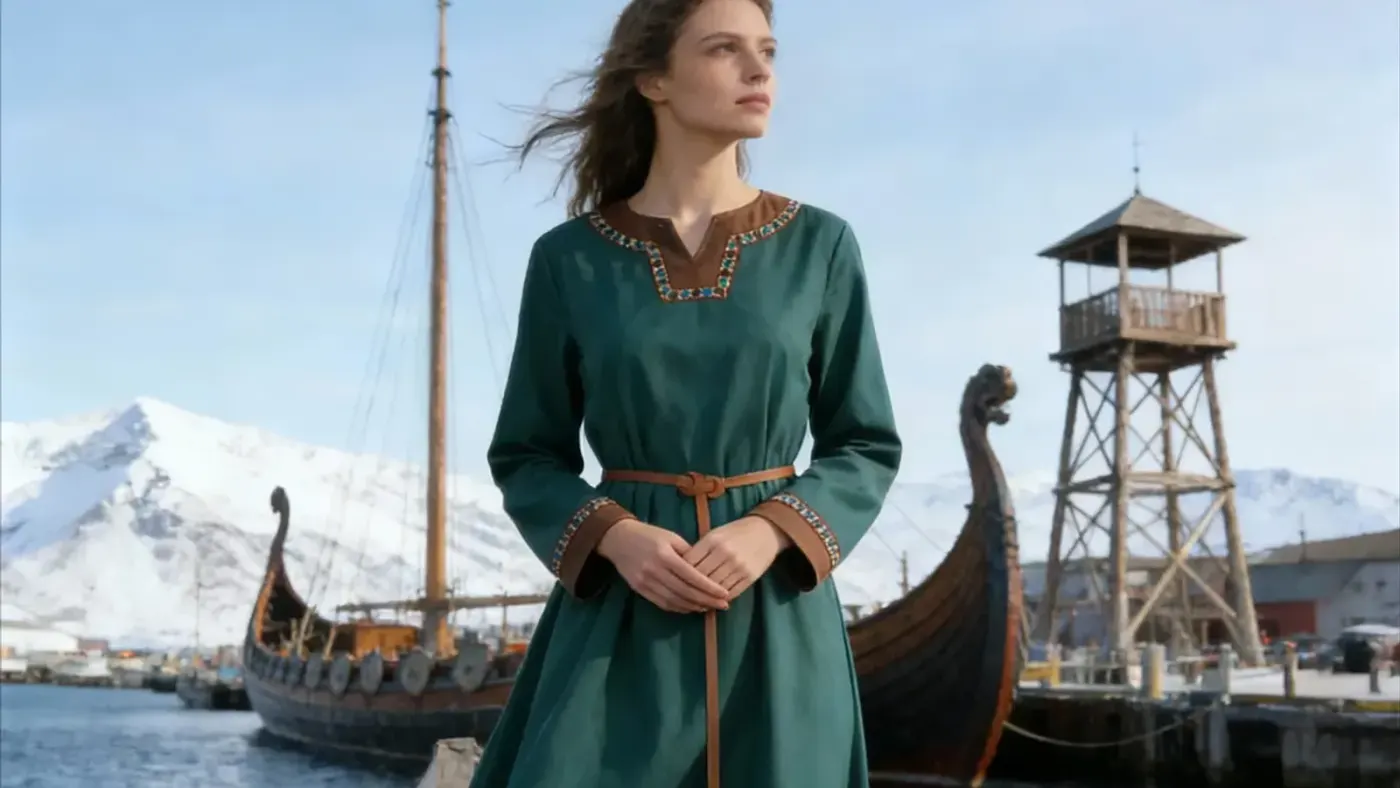
LARP buyers assemble a character from parts. A Viking kit might be a tunic, a belt, a hooded cloak, a pair of trousers and a chainmail-look piece; a ranger kit adds a leather-look jerkin and arm bracers. Selling separates lets a customer build a character over time and lets a vendor stock a smaller number of SKUs with more combinations.
Our Viking & LARP collection covers 33 styles across tunics, robes, capes, chainmail-look armor and belted layers, mostly in S–5XL. The pieces are designed to be worn in layers, so check the fit of the outer layer over the inner one when you build a size set.
Fabric choices for outdoor events
Cotton-look poplin and polyester blends are the workhorses: they are light, dry quickly and take colour well. Faux suede and velvet add weight and a period look but need more care in the rain. Metal-look knits and chainmail-look fabrics give the silhouette of armor without the weight, which matters for a full-day event.
Avoid fabrics that pill or snag easily on Velcro, buckles and branches. If the range includes a cloak, check the hem and the hood seam — these are the first places to fail when a costume is worn outdoors.
Sourcing checklist for a LARP range
- Approve samples in the sizes your event customers actually buy; check movement, not only static fit.
- Test the closures: lacing, buckles, hooks and belts should be strong enough for repeated use.
- Confirm colour fastness before a rainy-season event; dark dyes bleeding onto a lighter tunic is a common complaint.
- Check the size range of each layer separately; a cape that fits at M may not fit over a 3XL tunic.
- Plan reorder stock for the fair season; the same styles sell across spring and autumn events.
Stock styles start at one piece per style for a trial order, with mixed colours and sizes accepted, and bulk pricing starts at 10 pieces. Custom colours, fabrics and private-label programs are quoted from 100–300 pieces per style and colour. Stock samples take 3–7 working days; bulk production is usually 2–4 weeks after approval and deposit; custom development takes 6–10 weeks.
For a fair-season range, send the character list, size breakdown and event dates through the inquiry form. The medieval and Viking fabric guide covers material trade-offs in more detail.
FAQ
Are your Viking costumes suitable for LARP?
The Viking & LARP collection is selected for layering, movement and repeated wear. Approve a sample for your specific event conditions — outdoor use, weapon props and layering — before a bulk order.
Can I order separates rather than full costumes?
Yes. Tunics, capes, belts and armor pieces are listed as separate styles, so you can build a kit or stock separates.
What is the MOQ for a LARP range?
One piece per style for a trial order, with mixed colours and sizes. Bulk pricing starts at 10 pieces per style; custom colours and private label start at 100–300 pieces per style and colour.
How early should I order for Renaissance fair season?
For stock styles, allow 2–4 weeks for bulk production plus freight. For custom styles, plan 6–10 weeks. Spring and autumn fair seasons both need stock before the first event, so book production before the season starts.
Planning a seasonal or private-label range? Send us your brief and our team will reply with fabric, sampling and lead-time options.