Halloween Costume Sourcing from China: A Buyer's Checklist
Halloween is the least forgiving season in the costume calendar. The demand is concentrated into a few weeks, the assortment is wide, and a late shipment cannot be sold at full price in November. Most sourcing problems we see are not caused by a single bad factory decision; they start earlier, when the delivery date, assortment and specification are not planned together.
This checklist is written for importers, party retailers, event companies and online sellers who are building a Halloween range from China. It covers the sequence we use when a buyer asks us to quote a seasonal program, from the first delivery date to the final carton mark.
Why Halloween sourcing is a calendar problem
A costume has a long production chain for a product that sells for a short window. Fabric and trims must be booked, samples approved, sizes graded, bulk cut and sewn, then packed and moved by sea or air. Each step has a queue, and the queues get longer from June onward. If you start with the factory lead time instead of the retail date, the schedule usually looks comfortable on paper and fails in practice.
The safer approach is to reverse-plan. Decide when the goods must be in your warehouse, subtract freight and customs time, subtract production and QC time, and subtract sampling and approval time. The date that remains is the latest date to place the fabric order — not the date to start looking for a supplier.
Step 1: Set the delivery date first
Write down three dates before you request a quote: the date the first purchase order must ship from China, the date stock must be available for your first sales channel, and the date you will mark down unsold units. The gap between the second and third dates is your risk buffer.
For a Halloween program, sea freight is usually the only economical option for bulk cartons. Typical port-to-port transit is around 25–40 days depending on the route, and door-to-door delivery adds customs clearance and inland transport. Air freight is faster but rarely makes sense for low-value costume cartons except for reorders or a small hero style. Ask for a freight quote with the production quote so the delivery date is based on the full chain, not just the sewing line.
Step 2: Build an assortment, not a catalogue
A Halloween range needs a small number of strong looks, not a long list of similar ones. A workable structure is:
- Hero costumes — three to six statement pieces that carry the campaign and photography.
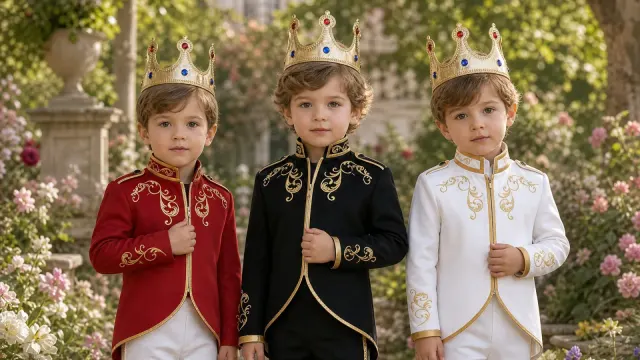
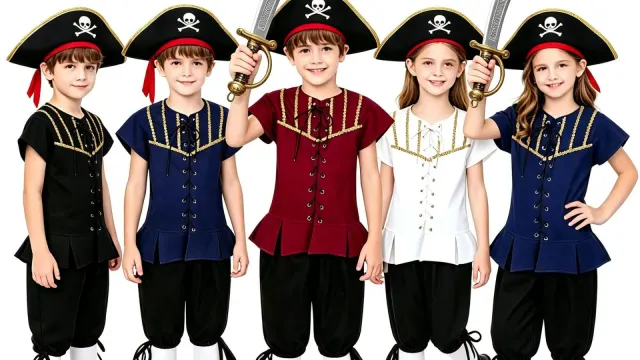
- Core repeatables — witch, vampire, pirate, skeleton and other recognisable looks that customers buy every year.
- Kids and family — smaller size runs with age-appropriate construction and packaging.
- Accessories — capes, hats, corsets and props that raise basket value without a new size run.
- One or two test styles — new silhouettes you can reorder if they sell.
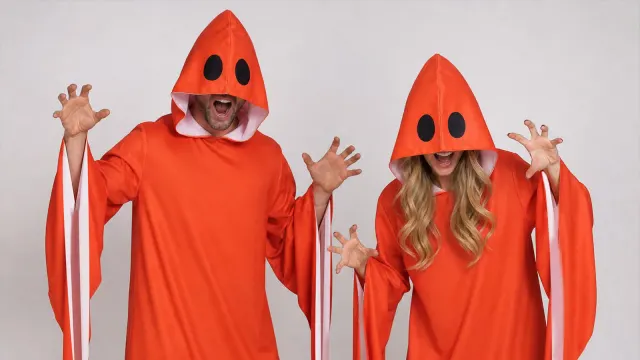
More SKUs multiply sampling, grading, photography and inventory risk. If you are testing a new supplier, start with a trial order of the styles you understand best, then add complexity. Our Halloween collection is organised so buyers can mix robes, capes, witch dresses and party costumes within one size range.
Step 3: Write a spec that survives production
A reference photo is not a specification. It shows a look but not the measurements, fabric weight, trim quality or finishing standard that determine whether the bulk order matches the sample. A useful spec sheet includes:
- Measurements — chest, waist, hip, sleeve, length and any stretch allowance, with a tolerance per point.
- Fabric — fibre content, approximate weight (gsm), stretch, lining and colour reference.
- Trims — lace width, buttons, zips, hooks, boning, feathers and any special finish.
- Construction — seam type, hem finish, closure position, interfacing and visible topstitching.
- Size range — the grade you need, including plus sizes and kids’ sizes.
- Packaging — polybag, hanger, label, barcode, size sticker and carton mark.
If you do not have a tech pack, send a physical reference sample plus detailed photos and measurements. A supplier can build the spec with you, but the approval should be in writing before bulk fabric is cut. This is also the stage to confirm whether your market requires specific labelling, fibre-content or flame-retardant documentation; requirements vary by country and product, so confirm them with your compliance adviser rather than assuming a generic certificate covers your range.
Step 4: Check the failure points
Halloween costumes are worn once or twice, but they are still photographed, tried on and returned. The failures that generate complaints are predictable:
- Closures — zips that catch, hooks that pull through thin fabric, and corset lacing without reinforced eyelets.
- Seams — skipped stitches, unfinished overlock edges and hems that drop after one wear.
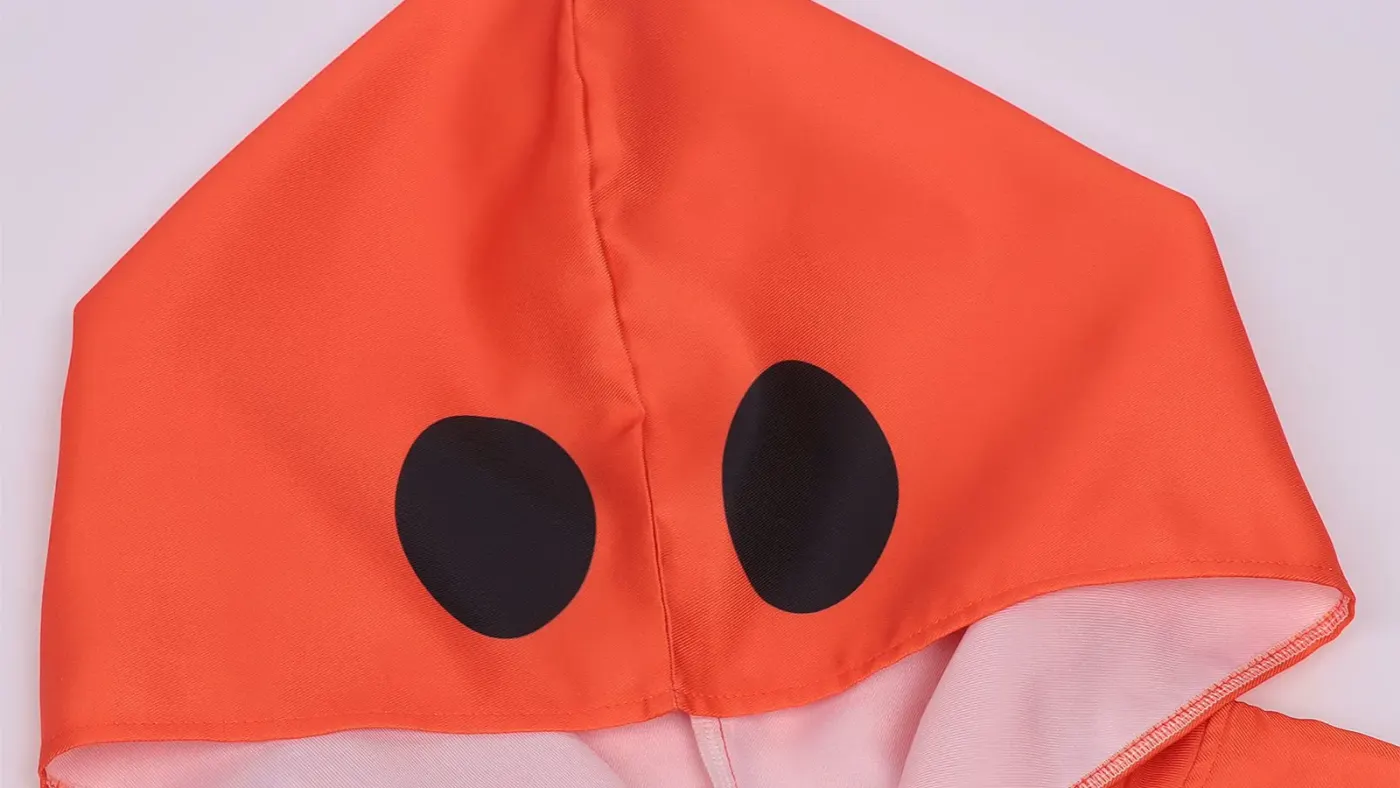
- Trim attachment — lace, sequins and appliqués that are glued rather than stitched.
- Fit — a sample that fits one model but was not graded for the full size run.
- Kids’ safety — small detachable parts, long cords and scratchy closures.
- Colour — a deep red or black that shifts between dye lots.
Ask to see the construction inside the sample, not only the outside. Turn it inside out, pull the seams gently, open and close every closure, and check that trims are stitched. For kids’ styles, confirm age labelling and small-part testing requirements for your market.
Step 5: Approve samples and fit
In-house samples for stock styles are usually ready in 3–7 working days. Custom designs take longer because fabric and pattern work must be confirmed first. Approve the sample against the spec, not against the photo, and record any changes in writing. If you are selling online, fit the sample on more than one body type; a costume that only works on the fit model will produce returns across the size run.
For a seasonal program, build in one sample round for fit and one for final confirmation if the style is new. If the schedule only allows one round, choose a stock style or a minor modification rather than a fully new design.
Step 6: Plan QC, packing and labels
QC should be scheduled before production starts, not after the cartons are ready. A practical plan covers incoming fabric inspection, in-line checks during sewing, a measurement audit and a final AQL inspection. Our quality-control process uses these checkpoints, and the inspection standard should be agreed in the purchase order.
Packing is part of the product. Confirm whether each piece is folded in a polybag, hung, or packed with a hanger and size sticker. Check that the barcode scans, the size label matches the carton mark, and the carton quantity matches the packing list. A correct carton at the wrong warehouse is still a late carton.
Step 7: Protect the delivery date
Even a well-planned order needs a buffer. Add 3–5% to your quantity for damage and replacement, and keep at least one week between the planned ex-works date and the latest date the forwarder can receive the goods. If the order is shipping by sea during peak season, book space early; space, not production, is often the constraint in August and September.
Ask for a production schedule with milestone dates: fabric in, cutting, sewing start, finishing, inspection and packing. A supplier who can give you these dates is easier to manage than one who only promises a final ship date.
The seekaya Halloween sourcing checklist
| Stage | What to confirm | Typical timing |
|---|---|---|
| Range plan | Hero, core, kids, accessories and test styles | 4–6 months before season |
| Spec and quote | Measurements, fabric, trims, packing, Incoterm | 2–3 weeks |
| Sampling | Fit, construction, colour, trim quality | 3–7 working days for stock styles |
| Bulk production | Fabric in, cutting, sewing, finishing | 2–4 weeks after approval and deposit |
| Custom program | Pattern, fabric sourcing, sample rounds | 6–10 weeks |
| QC and packing | AQL, measurements, labels, carton marks | 3–5 days |
| Freight | Sea, air or express; customs and inland delivery | Route dependent |
If you are planning a Halloween range and want a second pair of eyes on the timeline, send us your assortment, target retail date and size range. We can quote stock styles from one piece for a trial order, or develop a private-label program from 100–300 pieces per style and colour. Start with the inquiry form or read the shipping and lead-time guide.
FAQ
What is the MOQ for Halloween costumes?
Stock styles can start from one piece for a trial order, with bulk pricing from 10 pieces per style. Custom designs typically start at 100–300 pieces per style and colour, depending on fabric and construction.
How long does Halloween costume production take?
Stock-style samples are usually ready in 3–7 working days, and standard bulk orders ship in 2–4 weeks after sample approval and deposit. Custom programs typically take 6–10 weeks. Add freight time and book capacity early for August–October delivery.
Can you match a reference sample or a competitor style?
Yes. Send a physical sample, detailed photos and measurements. We can develop a close match, but we do not reproduce trademarked characters, logos or protected artwork without authorisation from the rights holder.
Do you offer private label and custom packaging?
Yes. We can produce with your label, size stickers, barcodes and carton marks. Confirm the artwork, label placement and packing method before bulk production so the packaging matches your sales channel.
Planning a seasonal or private-label range? Send us your brief and our team will reply with fabric, sampling and lead-time options.